Friday, November 28, 2014


Tuesday, November 25, 2014
Caranua: Is it a force for good or bad?
In essence, Caranua, a State body set up to help survivors to access funds given very reluctantly by the religious, is supposed to be part of the ‘good’
team. That would ordinarily be hard to believe considering what the survivor’s
of Ireland’s gulags have already gone through long after they visited hell on
this earth. Many survivors now are in their middle or late middle age years,
while others are in the seventh decade of their lives and older. Set in their
ways does not even begin to describe how they feel and the permanent feelings
of betrayal that casts a long shadow wherever they go. It is, I say
tentatively, whatever way you want to look at it, a beginning of closure at
it’s best, and that someone is still at least listening and doing something
about to help survivors. Caranua, I believe so far as possible to say without
fully knowing, is a force for possibly something better.

Mary Higgins
I can imagine, not too wildly, someone from Caranua fielding
phone calls from a lot of survivors. Survivors broadly, as children, were in
the main malnourished, poorly educated, without love, and abused in the main
three strands that define it: physical, sexual and emotional. Any or all of
these things happening to any child results in adulthood, a condition of an
inflexible kind and a flawed cognitive development of the mind starting with a big
‘them and us’ attitude in the many personal matters that make up their lives. Those phone
calls would make eavesdropping on them a blood sport. Like a teacher needing to
know how to teach, for Caranua it is a deep learning curve in how to deal with
that.
The chief executive head of Caranua is Mary Higgins. She
appears as a no nonsense kind of person so far, translating visually and orally
that she will do exactly what she needs to do for survivors. Her perspective on
them appears wide, and needs to be; she is not about taking ‘double speak’ as a
language either.
Commenting on the Christian Brothers unfulfilled promises of
contributions to the Caranua fund, Mary said this: “The more money we have the more it could spend on helping survivors. I think it would be a
concern if the promise wasn’t met.” The Christian Brothers of course have been
busy for well over a decade moving their liquid assets (over €i billion so
far and rising) and their vast property empires into very hard to get at ‘trust
funds’ in order to cheat survivors of their moral and just compensation. These actions extended to the many other orders of religious groups of nuns and priests as well (one order of nuns alone are the 5th biggest landowners in Ireland) The vows
of poverty was missed here !!
But these ‘trust funds’ have not been put together by God
and can be pulled asunder by man, and trust has nothing to do with it. Of
course these issues of morality and justice never bothered the religious before
and it would be rather optimistic to assume that it would bother them now. Only
the bedrock of solid law demanding recompense and accountability can and will do
that. The Christian Brothers gave what they were forced to give to their
victims and not one penny more, and only apologized for their crimes when they
no longer could deny the undeniable; this was also the world view of the other God squads. Mary is turning on their partners in crime too: the Irish Government,
and in particular the issuance of enhanced medical cards.
These enhanced medical cards have been issued to people who
were the victims of the Hepatitis C blood contaminate products, and available
for the Magdalene Laundry victims of the nuns, and yet not one card for the
15,000 victims of the Industrial and reformatory institutions run by the
religious in Ireland.
Mary Higgins saw it this way: “Given that everybody else who
falls into the survivor category is getting some form of enhanced healthcare,
we feel that ‘our people’ should get that too.” That wording: ‘our people’ lets
me believe that Mary is different and want to make a difference too. She went
on: “Over half of abuse survivors are aged 60 or over, and their health is
worse than their chronological age. They had a bad start in life, they had poor
nutrition, they were cold a lot of the time, they had ill fitting shoes, a lot
of them worked from a very young age on farms and they suffered abuse and
neglect as well.”
At the minutes of Caranua’s board meeting this year they
noted: “The Department of Health is not encouraging about survivors getting an
enhanced medical card.” Even the replicating of services regarding education
and more is an issue here, because many of these are freely available if you
are un-employed or impoverished, yet Caranua is footing the bill for them
leaving less monies for survivors for other and more vital matters starting
with health.
Caranua is there for survivors and Mary Higgins is a strong
voice for them and maybe for us. They must be given a chance to be heard, to observe,
and to protect their remit and resources so that more will be available for
survivors and their urgent needs in the autumn of their years. Only then can we
even begin to judge them.
The government historically and presently have been culpable
in the crimes and cover ups of the religious, and they too must be part of the
solution and not the problem. If that proves to be the case, then the religious
will have no choice but to do the right thing whether they want to or not.
Is Caranua a force for good or bad? We will have to wait and see.
Barry Clifford
Monday, November 24, 2014


Heroes For Empathy
Ever heard of “empathy marketing”? It’s the
latest business buzzword. The idea is that if companies can look through their
clients’ eyes and understand their desires, they will be better able to tailor
their offerings and gain a competitive advantage.
To me, this is stepping into someone else’s shoes
just to sell them another pair.
I believe that the best use of empathy is not in
the commercial world but in the social one, where it allows us to challenge
prejudices and create political change.
And if you look through history, there are some
extraordinary figures who have harnessed this power by engaging in what I think
of as “experiential empathy.” This is where you don’t just imagine
someone else’s life (a practice technically known as “cognitive empathy”) but
try to live it yourself, doing the things they do, living in the places where
they live, and knowing the people they know.
You might also call an experience of this nature
an “empathy immersion.” It’s like empathy as an extreme sport—one far more
exciting and adventurous than ice climbing or sky diving.
So here is my top-five list of people who took
empathy to the extreme, showing how it can transform the social and political
landscape.
1. St. Francis of Assisi: Learning
from beggars

In the year 1206, Giovanni Bernadone, the
23-year-old son of a wealthy merchant, went on a pilgrimage to St. Peter’s
Basilica in Rome. He could not help noticing the contrast between the opulence
and lavishness within—the brilliant mosaics, the spiral columns—and the poverty
of the beggars sitting outside. He persuaded one of them to exchange clothes
with him and spent the rest of the day in rags begging for alms. It was one of
the first great empathy experiments in human history.
This episode was a turning point in the young
man’s life. He soon founded a religious order whose brothers worked for the
poor and the lepers, and who gave up their worldly goods to live in poverty
like those they served.
Giovanni Bernadone, known to us now as St.
Francis of Assisi, is remembered for declaring, “Grant me the treasure of
sublime poverty: permit the distinctive sign of our order to be that it does
not possess anything of its own beneath the sun, for the glory of your name,
and that it have no other patrimony than begging.”
2. Beatrice Webb: From comfort to
the sweatshop

In the early 20th century it became popular for
writers and would-be social reformers—among them Jack London and George
Orwell—to spend time living down and out on the streets of East London to
experience the realities of poverty among the homeless, beggars, and
unemployed. The forgotten figure who started this tradition was the socialist
thinker Beatrice Webb.
Webb was born in 1858 into a family of well-off
businessmen and politicians. But in 1887, as part of her research into urban
poverty, she stepped out of her comfortable bourgeois life and dressed up in a
bedraggled skirt and buttonless boots to work in an East London textile
factory. The account of her adventure, Pages From a Work-Girl’s Diary,
caused a sensation. It was unheard of for a member of respectable society,
especially a woman, to have firsthand experience of life among the destitute.
“My own investigations into the chronic poverty
of our great cities opened my eyes to the workers’ side of the story,” she
wrote in her autobiography. Her empathy immersion inspired her to campaign for
improved factory conditions and to support the cooperative and trade union
movements. She later became a leading figure in the socialist Fabian Society
and co-founded the London School of Economics.
3. John Howard Griffin: Crossing
the racial divide
In 1959, the white, Texas-born Griffin decided to
get a taste of what reality was like for an African American man living in the
segregated Deep South. He dyed his skin black with a combination of sun lamps
and pigment-darkening medication, and then spent six weeks traveling and
working in Louisiana, Mississippi, Georgia, and South Carolina. Nobody ever
suspected his deception.
The best use of empathy is not in the commercial
world but in the social one.
It was an eye-opening experience. Working as a
shoeshine boy in New Orleans, he was struck by how white people stared through
him without acknowledging his presence. He experienced the everyday indignities
of segregation, such as walking miles to find a place to use the toilet, and
was subject not just to racist verbal abuse but to the threat of physical
violence.
He wrote about his experiences in the monthly
magazine Sepia, which had sponsored his experiment, and later in his
best-selling book Black Like Me.
Today it might seem condescending or unethical for
a white man to speak on behalf of other racial groups, but at the time most
African American civil rights activists saw his work as necessary because it
was so hard to get their own voices heard. Griffin gained widespread attention
for the cause of racial equality, and worked with Martin Luther King Jr.
At the heart of his book is a resounding message
about the value of empathy: “If only we could put ourselves in the shoes of
others to see how we would react, then we might become aware of the injustices of
discrimination and the tragic inhumanity of every kind of prejudice.”
4. Günther Walraff: Two years as an
immigrant worker
In 1983 the German investigative journalist
Günther Wallraff embarked on what may be the most extreme empathy immersion of
the 20th century when he spent two years undercover as a Turkish immigrant
worker.
What lessons should we draw from such inspiring
lives?
Wearing dark contact lenses, a black hairpiece,
and having perfected a broken German accent, he threw himself into a succession
of backbreaking jobs, such as unblocking toilets on building sites that were
ankle-deep in urine and shoveling coke dust at a steel factory without a
protective mask, which left him with lifelong chronic bronchitis. What struck
him most, he later wrote, was not the 19th-century working conditions but the
humiliation of being treated as a second-class citizen by “native” Germans.
His book about the Apartheid-like conditions
experienced by foreign workers in Germany, Lowest of the Low, sold more
than 2 million copies in 30 languages. It led to criminal investigations of
firms using illegal labor, and resulted in improved protection for contract
workers in several German states. Walraff’s work demonstrates the unique power
of experiential empathy for uncovering social inequality—an approach followed
by later investigative reporters such as Barbara Ehenreich.
5. Patricia Moore: A product
designer from all ages
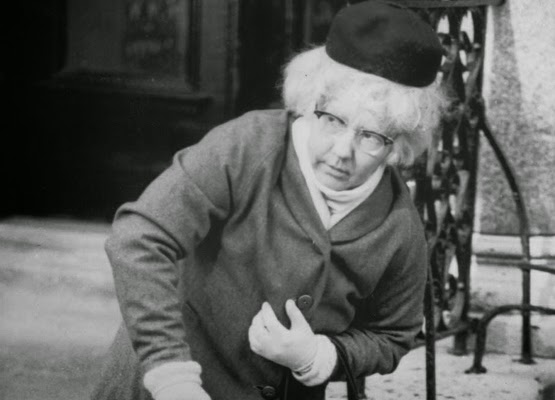
Today, one of the leading exponents of
experiential empathy is the U.S. product designer Patricia Moore, whose
specialty is using empathy to cross the generational gulf. Her best-known
experiment was in the late 1970s when, aged 26, she dressed up as an
85-year-old woman to discover what life was like as an elder. She put on makeup
that made her look aged, wore fogged-up glasses so she couldn’t see properly,
wrapped her limbs and hands with splints and bandages to simulate arthritis,
and wore uneven shoes so she hobbled.
For three years she visited North American cities
in this guise, trying to walk up and down subway stairs, open department store
doors, and use can openers with her bound hands.

Patricia Moore without her
disguise.
The result? Moore took product design in a
completely new direction. Based on her experiences, she invented new products
for use by elders, such as those thick rubber-handled potato peelers and other
utensils now found in almost every kitchen, which can easily be used by people
with arthritic hands. She went on to become an influential campaigner for the
rights of senior citizens, helping to get the Americans With Disabilities Act
enacted as law.
Her latest project is designing rehabilitation
centers for U.S. war veterans with missing limbs or brain injuries so they can
relearn to live independently, doing everything from buying groceries to using
a cash machine. Her whole approach, she says, is “driven by empathy, an
understanding that one size doesn’t fit all.”
How to be practice experiential
empathy
What lessons should we draw from such inspiring
lives?
Few of us are going to dress up as an 85-year old
or spend years masquerading as an immigrant worker. But we can all practice
experiential empathy in other ways. You could take part in Live Below The Line,
an anti-poverty campaign where tens of thousands of people each year live for
five days on $1.50 a day, which is the amount that more than 1 billion people
on the planet have to live on. Next time you go on a two-week vacation, sure,
spend some time lying on the beach in Mexico the first week, but why not
volunteer as a teacher at a local school in the second one?
And if a “wealth swap” isn’t your thing, try a
“God swap”: If you believe in a particular religion, spend a month going to the
services of different religions, including a meeting of humanists.
These are all ways of getting a little
experiential empathy into your life. Doing so will not only expand your own
worldview and imagination, but enable you to use empathy to create social
justice. And that’s a whole lot better than allowing this powerful form of
human understanding to become just another tool of the marketing industry.
Roman Krznaric
Sunday, November 23, 2014
The Slithering Snake Moves Again: Bertie Ahern
The Irish
Independent loves Fianna Fail; if it were only true. In particular they love the gross and greedy
little man called Bertie Ahern, the former prime minster of this land, even
though he sold this country into financial slavery for generations to come. You
would love the guy if you were in danger of being exposed yourself, and that is
why the Irish Independent is in a free fall of hate campaign against Sinn Fein.

Their interview/tribute coverage today of Bertie Ahern was stomach churning at best and where fiction was the only story left to tell. It was also nothing less than an attempt to discredit Sinn Fein by using a thoroughly discredited man. Is this the only thing they have left for their poisonous arrows: this traitor and gombeen of a man that has shackled us with the tempered steel chains of a never yielding debt. It is worth a look at some of the salient points (edited for bullshit and for economy of words) that this Fagin like character, Ahern, actually said in the order that it was spoken to the Irish Independent today:
“He was in
Labour, he was in Foreign Affairs, he was in Finance. He’d been able in them
all.”
On how Ahern saw
his equally corrupt buddy Brian Cowen as a minister who signed of on the debt that
woud sink this country to protect himself, his cronies and private banks.
“I obviously
worked with Charles Haughey.....Brian Cowen and myself would be close too. We
keep in touch.”
On the the past
gansters who he also respects. The three prime ministers so corrupt that they
give corruption a bad name by their sheer blatancy.
“Gerry Adams
saying he was not in the IRA is like me saying I was not in Fianna Fail.”
On Jerry Adams
denial that he was in the IRA.
Of course Bertie
could have used the analogy that it was like him saying that he never a bank
account or ‘friends’ who only gave him a ‘dig out’ and not a bribe. And so the slithering snake moves
again.
There is not a
day goes by that the Irish Independent does not try in some form, blatant or otherwise,
to attack Sinn Fein, a newspaper on it’s way to being a blog, and a sad one at
that. But it is telling that the snake Ahern is ahead of them by knowing one
thing that will not go away, and that the Irish Independent has not fully
grasped yet: “I think the main
establishment parties might be leaving the streets to Sinn Fein. This is a
difficulty. We are living in the age of the internet..........” Well, check out the
brain on Brad.
Politics is won
on the streets, protest matters there too for he who shouts the loudest will be
heard, and the truth of it all between the lines finely tuned in the digital
technology of the internet.
On that truth it
is worth knowing this: Cowen and Ahern between them need 37 homes alone to pay water charges for one year (based on the latest and fast changing prices)
just to pay them their pension for an incredible one week. A €3000 weekly reward each for their corruption in bringing this country to
its knees without ever having to fire a water pistol, and one that did not even have water in the end. It is when both are in prison for the crimes that they committed is when we know that democracy actually exists in this country.
By Barry Clifford
Subscribe to:
Posts (Atom)